

Short answer: Yes. Women over 50 can absolutely become more athletic. While aging changes how the body responds to training, research shows that strength, power, balance and coordination remain highly trainable throughout midlife and beyond. My own journey into Parkour has shown me that athleticism isn’t something we leave behind, it’s something we continue to build.
Long answer: If you ask most people whether women over 50 can become athletic again, you’ll usually get one of two answers.
The first is a polite version of “not really.”
The second is an enthusiastic “of course they can!” followed by some generic advice about walking more, staying active and perhaps taking up yoga.
The first answer is complete bollocks.
The second is well-intentioned, but it misses something important.
The real question isn’t whether women over 50 can become athletic again.
The real question is what athleticism actually means.
As a 57-year-old Parkour athlete, I’ve spent the last few years accidentally conducting an experiment on myself. Not because I set out to prove a point, but because Parkour has a habit of exposing truths you’d rather ignore.
For me, athleticism isn’t about looking like an athlete. It’s the ability to apply strength, power, balance, coordination, mobility and sound decision-making to real-world movement challenges.
I Thought I Was Already Athletic
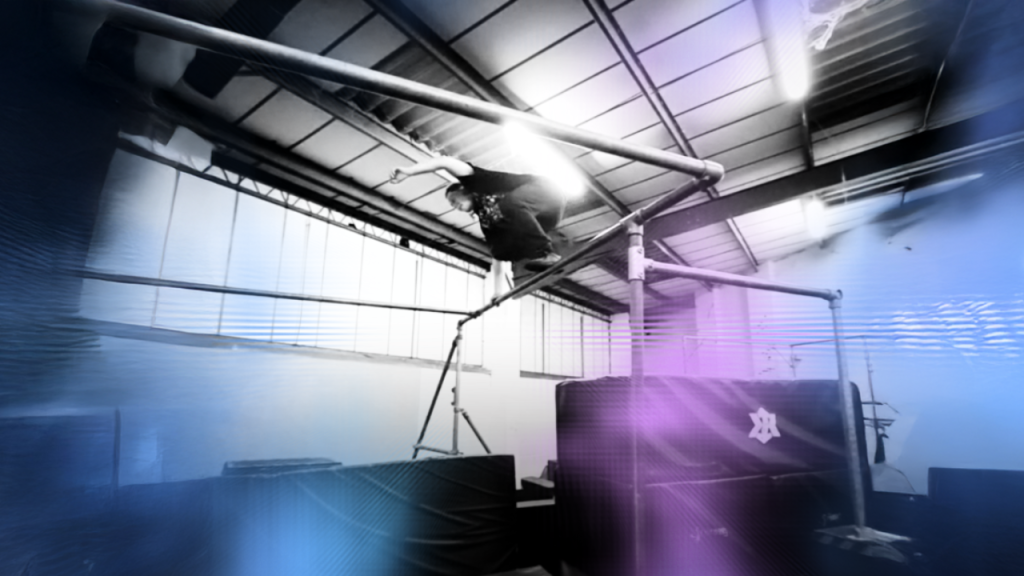
When I started Parkour, I wasn’t coming from the sofa.
I already exercised regularly. I lifted weights, did Krav Maga, walked a lot, stretched occasionally and generally considered myself reasonably fit. Naturally, I assumed that background would give me a decent head start. In some ways it did.
Having a foundation of strength and general fitness certainly made the basics easier than they might otherwise have been. What it didn’t do was prepare me for what the exciting side of Parkour actually demands.
Parkour isn’t particularly interested in how much you can bench press or how many hooks and jabs you can throw.
It wants to know whether you can generate power quickly, control your body in space, balance on awkward surfaces, adapt to changing environments and stay calm when your brain starts screaming that what you’re about to do is a terrible idea.
One of the first shocks came when I realised that lifting respectable weights didn’t automatically translate into being able to jump confidently between obstacles. The two scenarios couldn’t be more different.
I could move heavy things. I could complete intense workouts. Yet standing on the edge of a jump that required power, precision and commitment exposed weaknesses that years of conventional fitness training had quietly hidden.
Parkour became a brutally honest teacher. It showed me exactly where the gaps were.
The Challenge Was Never My Age
At the time, I was also dealing with PTSD, which occasionally created mental blocks every bit as challenging as the physical ones.
Some days my body was capable of something that my nervous system simply wouldn’t allow. Other days fear would appear out of nowhere and stop me in my tracks. Of course there were plenty of sessions where everything went well. But if I’m being honest, I hit my ceiling more often than I smashed through it.
It would have been easy to blame my age. Many people do.
Every wobble, hesitation, ache or setback gets filed under “well, that’s what happens when you get older.” The trouble is that explanation often gets accepted long before it’s been tested.
The issue wasn’t that I was over 50, I hadn’t yet developed the specific physical and mental capacities that the challenges required.
That’s a very different problem, and thank goodness for that!
Because what can be trained can be improved.
The Moment Everything Changed
The biggest breakthrough came when I stopped treating Parkour as something I did once or twice a week and started training specifically to improve at it. Instead of hoping practice alone would solve everything, I began addressing the weaknesses Parkour had exposed.
I worked on explosive power because power matters when you’re trying to launch yourself from one obstacle to another. I worked on mobility because reaching further while reducing the likelihood of pulling something important is generally a good idea. I worked on balance because it turns out I wasn’t nearly as good at it as I thought.
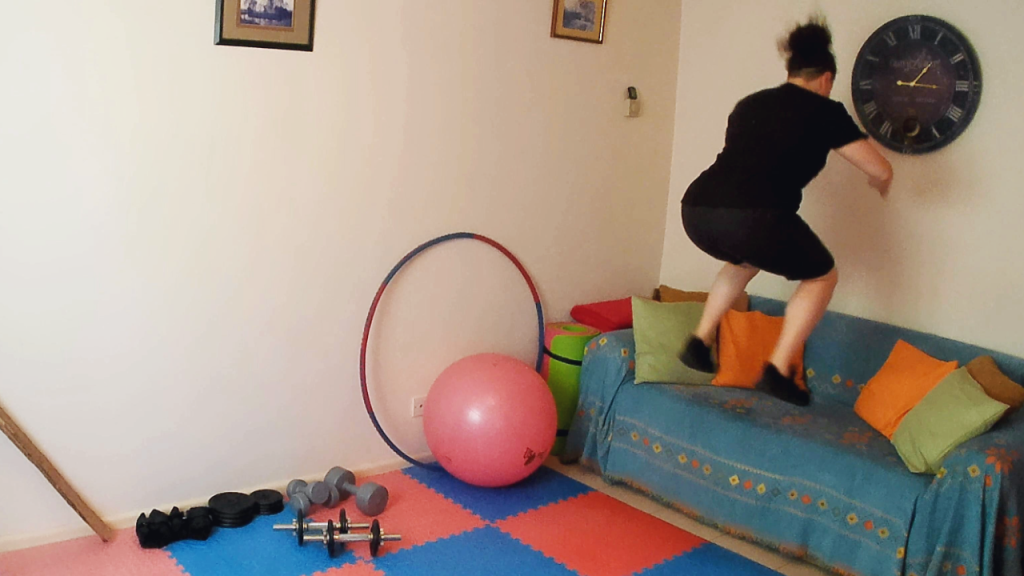
Most importantly, I began using shorter, more focused conditioning sessions designed to improve the specific qualities that Parkour demanded.
Within weeks, things started changing. Jumps that had previously felt impossible began to feel manageable. Movements that once looked terrifying started becoming routine. Challenges that had stopped me in my tracks became things I could approach calmly and methodically.
The lesson was impossible to ignore.
Athleticism wasn’t something I either possessed or lacked, it was mine to build.
Why Confidence Was Never The Starting Point
One of the most common pieces of advice people receive is to “believe in yourself.” I’m not entirely convinced that’s enough. I’ve seen plenty of people overestimate their abilities and get injured because confidence arrived before competence.
My experience has been almost the opposite: confidence is usually the result of evidence.
You train. You practise. You develop the necessary qualities. You tackle progressively harder challenges. You collect proof that you can handle them.
Then confidence arrives as a natural consequence.
One of the biggest lessons Parkour has taught me is that confidence doesn’t tell me I can do a big jump. The evidence does. The big jump is simply where the evidence gets tested.
Why I Hired A Coach
A few years into my journey, I realised that general fitness was no longer the limiting factor. The next stage of progress required more explosive power, better movement efficiency and stronger technical skills than I could reliably develop on my own.
So I hired a specialist coach. I’ve now been working with him for around 18 months, and it’s been one of the best investments I’ve made in my development.
Some people assume coaching is only for beginners. I see it differently.
Coaching is for people who want to continue growing. The better you become, the more valuable expert guidance often becomes.
What Science Says About Athleticism After 50
One of the most persistent myths about ageing is that physical decline follows a simple, unavoidable downward trajectory.
The reality is far more interesting.
While certain physiological changes do occur with age, the human body remains remarkably adaptable. Decades of research have shown that adults in their sixties, seventies and even eighties can increase muscle strength, build muscle mass and improve explosive power through progressive resistance training. In other words, growing older doesn’t stop adaptation, it simply changes the way we need to train and recover.
The same principle applies to the brain. Thanks to neuroplasticity, our nervous system continues to form new connections throughout life. That means we can keep learning new movement skills, refining technique and improving coordination well into later life, provided we keep giving the brain a reason to adapt.
This matters because athleticism isn’t just about muscles.
It’s also about coordination, timing, balance, mobility, decision-making and movement efficiency. These qualities are trainable because both the body and the nervous system continue responding to appropriately challenging practice.
Becoming more athletic isn’t about reversing time, it’s about continuing to adapt.
Will a 57-year-old recover like a 20-year-old?
Not a chance.
But that’s the wrong comparison. The meaningful question is whether you can become more capable than you are today.
The scientific evidence, and my own personal experience, both strongly suggest that you can.
The Oldest Person In The Room
These days I’m usually the oldest person in the Parkour gym, sometimes by a considerable margin.
Yet there are still occasions when I’m one of only a handful of people able to complete a particular challenge.
Not because I’m naturally gifted or fearless. And definitely not because I discovered some secret anti-aging formula.
It’s because I’ve spent years building capabilities deliberately.
I’ve created a training approach that works with my nervous system, around work commitments and within the realities of adult life rather than some fantasy schedule.
I’ve made consistency easier.
And every time I show up, I add another small piece of evidence. Sometimes even a little more courage.
So, Can Women Over 50 Become Athletic Again?
I think the question itself is slightly flawed.
It assumes athleticism is something that disappears and can only be recovered.
My experience suggests something different.
Athleticism is a collection of qualities that can continue developing throughout life.
You don’t need to take up Parkour.
You don’t need to jump over walls, balance on rails or throw yourself across gaps.
But you may need to challenge the assumption that your most capable days are behind you.
Parkour taught me far more than how to jump the length of my car. It taught me to question every assumption I’d ever made about growing older.
It also taught me that once you stop seeing age as a limitation and start seeing it as a variable, your entire relationship with possibility begins to change.
🤘🖤
Frequently Asked Questions (TL;DR)
Fitness and athleticism are related, but they’re not the same thing. Fitness usually refers to qualities such as cardiovascular endurance, muscular strength or body composition. Athleticism is about applying those qualities to real-world movement. It combines strength, power, balance, coordination, mobility, agility and decision-making. Parkour taught me that I could be fit enough to complete a tough workout, yet still lack some of the qualities needed to move confidently and efficiently through complex physical challenges.
Not at all. Research consistently shows that adults over 50 can gain muscle strength, improve balance and increase power through progressive resistance training. Strength training is one of the most effective ways to support healthy aging because it helps preserve muscle mass, maintain independence, improve bone health and reduce the risk of falls. The key is to start at an appropriate level and progress gradually.
It can be, provided it’s approached sensibly. Parkour isn’t about jumping between rooftops or attempting viral stunts. Good coaching focuses on building movement skills progressively, starting with balance, landing mechanics, vaults and body awareness before moving on to more demanding challenges. Like any activity, the risk depends far more on how you train than on your age.
Absolutely not. Parkour simply became the environment that taught me these lessons. You can develop athleticism through strength training, hiking, dancing, martial arts, climbing, tennis, swimming or countless other activities that challenge your body to move in different ways. The important thing isn’t the sport you choose—it’s continuing to develop new physical and mental capabilities instead of assuming your best years are behind you.


Leave a Reply